Store Credit — 5% off your next order
Your first order is at regular price. Once that order is placed you earn 5% store credit on any product — the discount is applied automatically at checkout from your 2nd purchase onward. Just be signed in to the same account you ordered with.

Quick view


Rotisserie Ovens
Commercial Rotisserie Ovens for Restaurants, Delis and Grocery Stores
A commercial rotisserie oven is a professional oven that cooks food on rotating spits or in rotating baskets, so it roasts evenly and bastes in its own juices. It is best known for rotisserie chicken, and it is a staple in restaurants, delis, grocery stores, butcher shops and takeout kitchens.
Rotisserie ovens do two jobs at once: they cook, and they sell. With glass doors and interior lighting, customers can see the product turning, which makes the oven a merchandising tool as well as a cooking appliance.
A3 Equipment carries commercial rotisserie ovens for kitchens and retail counters across Canada. This page explains how they work, how the main types differ, and what to check before you order, including capacity, fuel, cleaning and ventilation.
What Is a Commercial Rotisserie Oven?
A commercial rotisserie oven is a gas or electric oven with a rotating spit or basket system that turns food continuously while it cooks. The rotation exposes all sides to the heat, and the meat bastes itself as juices run over the surface.
How a rotisserie oven works
A heat source, either gas burners or electric elements, heats the cooking chamber. Chickens or other items are loaded onto spits or into baskets, which rotate for the whole cook. The constant turning gives an even, browned skin and helps keep the meat moist. Drip pans collect the juices and fat.
Spits vs. baskets
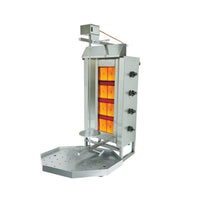
Spit-style ovens hold whole chickens or roasts on rotating spits, and are the classic choice for display and volume. Basket-style ovens use removable baskets, which can make loading and cleaning easier. Some models offer a vertical spit for hanging meats or kebabs.
Gas vs. electric rotisserie ovens
Gas models use burners and need a gas connection. Electric models use heating elements and need the right voltage and phase. Many product lines are available in both. Your available utilities usually decide which is practical.
Benefits of Commercial Rotisserie Ovens
- Even, consistent roastingContinuous rotation cooks all sides evenly and bastes the product naturally.
- Strong visual appealGlass doors and interior lighting let customers watch the product cook, which supports impulse sales at the counter.
- Batch cooking for volumeMultiple spit levels let you cook several batches at once, which suits lunch and dinner rushes.
- One oven, several menu itemsChicken is the usual product, but ovens can also cook roasts, ribs, ham, and in some configurations, vegetables.
- Range of sizesCountertop units suit small shops, and floor models suit supermarkets and high-volume operations.
- Holding optionsSome models include a warmer base to hold finished product at serving temperature.
Types of Commercial Rotisserie Ovens
- Gas rotisserie ovensGas rotisseries use burners, and some use infrared burners for fast cooking in compact spaces. They need a gas connection and ventilation that meets local code. Check whether the oven runs on natural gas or propane before you order.
- Electric rotisserie ovensElectric rotisseries run on a dedicated electrical supply. Voltage options vary by model, so confirm the voltage and phase against your supply. Some electric models are available in ventless configurations, which can simplify placement.
- Countertop rotisserie ovensCountertop models are the smaller option. They suit delis, small restaurants and convenience stores with moderate demand and limited space.
- Floor-standing rotisserie ovensFloor models hold more product and suit supermarkets, takeout restaurants and high-volume kitchens. Check the footprint and whether you need a stand or base.
- Capacity rangesRotisserie capacity is usually expressed as the number of whole chickens per load. The range is wide, from compact units for under a dozen birds to large floor models for several dozen. Always check the capacity per load on the product page.
| Type | Typical use | Key consideration |
|---|---|---|
| Countertop | Delis, small shops, low to moderate volume | Counter space and electrical supply |
| Floor-standing | Supermarkets, takeout, high volume | Footprint, venting and utilities |
| Gas | Kitchens with a gas supply | Gas line and ventilation |
| Electric | Kitchens without gas, or limited ventilation | Voltage, phase and ventless options |
Rotisserie Ovens at A3 Equipment
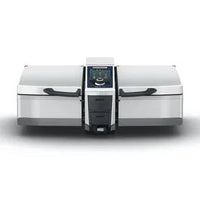
Both current models are natural gas. Ask us if you need an electric or ventless configuration and we will quote one.


How to Choose the Right Commercial Rotisserie Oven
The right rotisserie oven depends on your peak volume, space, fuel supply, cleaning routine and how you plan to display and sell the product.
- CapacitySize to your busiest period, not your average day. Count how many chickens you need ready at once, then check the capacity per load and the number of spit levels. Choose a model that covers peak demand with a little room to grow.
- Gas or electricCheck your available gas and electrical supply. Gas models list their output in BTU and electric models in kW, so compare them against your connections. Confirm voltage and phase for electric units.
- Spit or basket styleSpits suit whole-chicken display and volume. Baskets can ease loading and cleaning, and suit a mixed menu. Choose based on what you cook and how your staff load the oven.
- CleaningRotisserie ovens collect grease, so cleaning matters. Look at what each model offers: manual wash-down with removable parts, steam-assisted cleaning programs, or automated multi-stage cycles. The right level depends on your staffing and how often you clean.
- VentilationGas models need ventilation that meets local code. Ventless electric models can be an option where a hood is difficult, but confirm that they are approved for your location with your local authority.
- Space and displayMeasure the footprint and door swing, and check whether you want a glass front, interior lighting or a warmer base. For retail counters, the oven’s look is part of the sale.
| Consideration | What to check |
|---|---|
| Capacity | Chickens per load, spit levels |
| Fuel | Natural gas, propane or electric |
| Style | Spit or basket |
| Cleaning | Manual, steam-assisted or automated |
| Ventilation | Hood or ventless option |
| Space | Footprint, countertop or floor |
| Extras | Glass doors, lighting, warmer base |
Not sure which model fits? Send A3 Equipment your menu, daily volume and kitchen details, and our team can help you compare options.

Why Buy Rotisserie Ovens from A3 Equipment?
A3 Equipment supplies commercial foodservice equipment to kitchens across Canada. Our team can help you compare rotisserie ovens against your menu, volume, fuel supply and layout, so you choose a model that fits how you operate.
You can also look at related cooking equipment, such as convection ovens, combi ovens and holding equipment, on the same site when you plan your cooking line.
Browse the rotisserie ovens above, or contact A3 Equipment for help choosing a model.
Commercial Rotisserie Oven FAQs
What is a commercial rotisserie oven?
A commercial rotisserie oven is a professional oven that cooks food on rotating spits or baskets. The rotation gives even browning and keeps the meat moist, and the oven is most often used for rotisserie chicken.
What can you cook in a rotisserie oven?
Whole chickens are the most common, along with roasts, ribs, ham and turkey pieces. Some models and accessories also support kebabs and vegetables. Check the product page for the foods a model is designed for.
Gas or electric: which rotisserie oven should I choose?
It depends on your utilities. Gas models need a gas connection and ventilation, while electric models need the right voltage and phase. Many product lines come in both versions, so match the oven to what your kitchen has.
How many chickens does a rotisserie oven hold?
It depends on the model. Countertop units hold fewer birds per load, and floor models hold several dozen. Choose a capacity that covers your busiest period.
Do rotisserie ovens need a hood?
Gas models need ventilation that meets local code. Some electric models are available as ventless units. Confirm what your location requires with your installer and local authority.
How do you clean a commercial rotisserie oven?
Cleaning varies by model. Some are cleaned manually with removable parts and drip pans, some offer steam-assisted programs, and some have automated cycles. Check the cleaning features before you buy.
What is the difference between a spit and a basket rotisserie?
A spit rotisserie holds chickens or roasts on rotating spits and is the classic display style. A basket rotisserie uses removable baskets, which can make loading and cleaning easier.
What does a rotisserie oven need for installation?
A gas or electrical connection, ventilation where required, and enough space for the footprint and door swing. Gas connections should be made by a licensed professional.
Not sure which rotisserie oven fits your counter?
Send us the number of birds you need ready at peak, the gas or electrical supply you have, and whether the oven will face customers. We will come back with the models that fit and a delivery quote for your address.
- Phone
- (778) 512-5098
- Toll-free
- +1 833-673-1893
- Info@a3trading.ca
- Warehouse
- 107 12332 Pattullo Pl, Surrey, BC V3V 8C3