
Store Credit — 5% off your next order
Your first order is at regular price. Once that order is placed you earn 5% store credit on any product — the discount is applied automatically at checkout from your 2nd purchase onward. Just be signed in to the same account you ordered with.

Quick view 
Quick view 
Quick view 
Quick view 
Quick view 
Quick view


Heated Display Cases
Commercial Heated Display Cases for Delis, Cafés and Grocery Counters
A commercial heated display case is a glass-front cabinet that holds cooked food at serving temperature while customers can see it. It keeps food hot and ready for sale, and the display does part of the selling.
Delis, grocery stores, convenience stores, bakeries, cafeterias, takeout restaurants and food courts use heated display cases to hold items such as fried chicken, pizza, pretzels, pastries, sandwiches, rice, vegetables and prepared meals. Some models are built for staff to serve from behind the counter. Others let customers help themselves.
A3 Equipment carries commercial heated display cases for kitchens and retail counters across Canada. This page explains how they work, how the main types differ and what to check before you order, so you can match a case to your menu, counter and service style.
What Is a Commercial Heated Display Case?
A commercial heated display case, also called a hot food merchandiser or food warmer display, is a heated cabinet with glass sides and shelves or wells that hold cooked food at serving temperature. It is built to hold and present food, not to cook it.
How a heated display case works
A heating system warms the interior and holds it at a set temperature. Thermostat controls let staff adjust the heat. Glass fronts or doors allow customers to see the product, and interior lighting highlights it. Many models also let you add humidity, which changes how the food holds.
Humidity vs. dry heat
Moist foods, such as vegetables, rice, sauces and braised items, usually hold better with humidity. Crisp foods, such as fried items, breaded products and pizza, usually hold better with dry heat. If your menu includes both, look for a model with humidity control or separate zones. Always follow the manufacturer’s instructions for each product.
Heated display cases vs. hot food tables
A heated display case is a closed or glass-fronted cabinet for retail and counter service. A hot food table has open wells and suits buffet and serving lines. If you serve from open pans on a line, see our commercial hot food tables. For holding food away from the counter, see our food holding cabinets.
Benefits of Commercial Heated Display Cases
- Food stays at serving temperatureThe heated interior holds cooked food ready for sale, which supports quality and food safety when used correctly.
- Strong visual merchandisingGlass fronts and interior lighting put the product in front of customers, which supports impulse sales.
- Options for different foodsHumidity and dry-heat options help hold both moist and crisp items.
- Range of sizesCountertop models suit small counters, and floor models suit higher volume.
- Service-style flexibilityFull-service models suit staffed counters, and self-service models suit cafeterias and convenience stores.
- Easy to cleanStainless steel and glass surfaces wipe down quickly, which suits a daily cleaning routine.
Types of Commercial Heated Display Cases
Countertop heated display cases
Countertop models sit on a counter and suit cafés, delis, bakeries and convenience stores with limited space. They hold fewer pans or trays than floor models, which makes them a fit for lower or moderate volume.
Floor-standing heated display cases
Floor models stand on their own and hold more product. They suit grocery stores, caterers, food courts and busy takeout operations. Check the footprint and the delivery path before you order.
Full-service heated display cases
Full-service cases are designed for staff to serve from behind the counter. Customers see the food through the glass, and staff open doors or access panels to serve.
Self-service heated display cases
Self-service cases let customers take items themselves. Many have multiple compartments, sometimes with individual controls, which suits cafeterias, convenience stores and fast-casual restaurants.
Humidified, bain-marie and cubed styles
Some cases include humidity control. Others use a bain-marie (a heated water bath) or a cubed layout with separate compartments for different foods. Check the product page to see which style a model uses.
| Type | Typical use | Key consideration |
|---|---|---|
| Countertop | Cafés, delis, small shops | Counter space and electrical supply |
| Floor-standing | Grocery, catering, food courts | Footprint and utilities |
| Full-service | Staffed counters | Access from the serving side |
| Self-service | Cafeterias, convenience stores | Compartments and sneeze protection |
| Humidified | Moist foods such as rice and vegetables | Water supply and cleaning |
Heated Display Cases at A3 Equipment
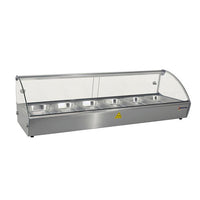
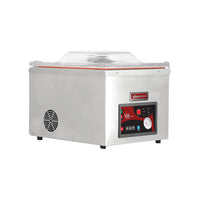
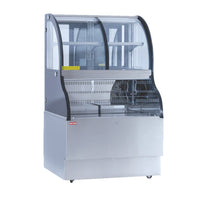
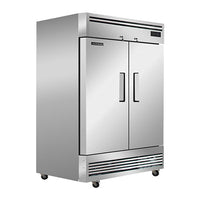
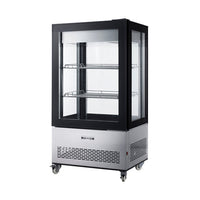
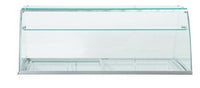
Four of the six cases we list. All are countertop units with a 30–90°C thermostat, in two widths and four heights. Ask us if you need a floor-standing merchandiser.


How to Choose the Right Commercial Heated Display Case
The right heated display case depends on what you hold, how much you sell, how customers are served and the space and power you have. Start with these points.
- What you holdList the foods you want to display. Crisp items favour dry heat, and moist items favour humidity. Mixed menus may need humidity control or separate compartments.
- CapacityCheck how many pans or trays the case holds, and the shelf layout. Match capacity to your busiest period, not an average day.
- Service styleChoose full-service if staff serve from behind the counter. Choose self-service if customers help themselves, and check for compartments, doors and sneeze protection.
- Glass style and lightingLook at the glass shape (curved or straight), visibility from the customer side and the interior lighting. Appearance matters for retail counters.
- Controls and temperature managementCheck the temperature controls and whether zones can be set separately. Hold food at the safe temperature required by your local health authority.
- Electrical requirementsConfirm the voltage, wattage and plug or hardwire requirement against your supply. Check that your circuit can carry the unit.
- Space and cleaningMeasure the footprint and clearances. Look at how easily shelves, glass and any water reservoir can be removed and cleaned.
| Consideration | What to check |
|---|---|
| Menu | Crisp, moist or mixed items |
| Capacity | Pans or trays, shelf layout |
| Service style | Full-service or self-service |
| Display | Glass style and lighting |
| Heat | Dry, humidified or separate zones |
| Power | Voltage, wattage, plug or hardwire |
| Space | Counter or floor footprint |
| Cleaning | Removable shelves and easy access |
Not sure which case fits your counter? Send A3 Equipment your menu, volume and layout, and our team can help you compare options.

Why Buy Heated Display Cases from A3 Equipment?
A3 Equipment supplies commercial foodservice equipment to kitchens and retail counters across Canada. Our team can help you compare heated display cases against your menu, counter layout, service style and electrical supply, so you choose a model that fits how you sell.
You can also look at related equipment, such as hot food tables, food warmers and pizza warmers, on the same site when you plan your full serving line.
Browse the heated display cases above, or contact A3 Equipment for help choosing a model.
Commercial Heated Display Case FAQs
What is a commercial heated display case?
A commercial heated display case is a glass-front cabinet that holds cooked food at serving temperature while customers can see it. It is built for holding and presenting food, not for cooking it.
What can you keep in a heated display case?
Fried chicken, pizza, pretzels, pastries, sandwiches, rice, vegetables and prepared meals, among other items. Choose a model that suits your foods, since crisp and moist items hold differently.
Do heated display cases cook food?
No. They hold food that is already cooked at serving temperature. Cook the food first, then place it in the case.
What is the difference between a heated display case and a hot food table?
A heated display case is a glass-fronted cabinet for counter and retail service. A hot food table has open wells and suits buffet and serving lines. Pick based on how you serve.
Do heated display cases have humidity control?
Some do. Humidity helps moist foods stay fresh, while dry heat suits crisp foods. Check the product page for humidity features and what the model supports.
What is the difference between full-service and self-service cases?
Full-service cases are for staff to serve from behind the counter. Self-service cases let customers take items themselves, and often have separate compartments and doors.
What size heated display case do I need?
Size it to your busiest period and the number of pans you display. Countertop units suit small counters and lower volume, while floor models hold more. Check capacity and footprint on the product page.
What power does a heated display case need?
Most are electric, and requirements vary by model. Check the voltage, wattage and plug or hardwire requirement before ordering, and confirm your circuit can support the unit.
Not sure which case fits your counter?
Send us what you sell, how much you hold at your busiest hour and the width you have on the counter. We will come back with the sizes that fit and a delivery quote for your address.
- Phone
- (778) 512-5098
- Toll-free
- +1 833-673-1893
- Info@a3trading.ca
- Warehouse
- 107 12332 Pattullo Pl, Surrey, BC V3V 8C3