
If your coffee station runs dry during a busy breakfast rush, the problem usually isn't the coffee. It's the equipment during a banquet service. A single-serve drip machine simply can't keep up when 60 guests want a cup within the same 20 minutes. That's where a commercial coffee percolator earns its place on the line, and it's one of the pieces of restaurant coffee equipment worth getting right the first time.
This guide from A3 Equipment breaks down what a commercial coffee percolator is, how it works, and how to pick the right size and features for your restaurant, cafés, or banquet hall.
Key Takeaways
-
A commercial coffee percolator brews a large batch and holds it hot. It is ideal for buffets, banquets, and self-serve stations, but not for espresso-style service.
-
Brewing temperature, brewing time, and grind size all affect coffee strength and taste in bulk coffee brewing equipment.
-
Size your percolator's cup capacity to your busiest service window, not your average day, to avoid running dry mid-service.
-
Stainless steel, double-wall insulated units are more energy-efficient and durable for daily restaurant use.
-
A non-drip faucet and NSF-certified stainless steel build are worth prioritizing over price alone.
What Is a Commercial Coffee Percolator?
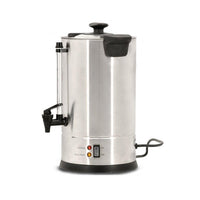
A commercial coffee percolator, also called a coffee urn or commercial coffee dispenser, is a large-capacity brewing unit built for volume rather than precision. Instead of brewing single cups, it uses batch brewing to produce a large batch of coffee in one cycle, then holds it at serving temperature for hours, ready to be poured through a front-mounted tap.
It's a category of commercial coffee equipment built specifically for high-turnover food service: hotel breakfast buffets, church halls, staff cafeterias, catering events, and self-serve diners.
Unlike a countertop drip commercial coffee maker, a percolator is designed to sit and hold, not brew one pot after another. That single difference is what makes it the right choice of coffee brewing equipment for continuous, high-volume service. If you want to see current options, A3 Equipment stocks a range of commercial coffee percolator Canada models built for exactly this kind of daily use.
How Does a Commercial Coffee Percolator Work?

The mechanics are straightforward, which is part of the appeal. Cold water sits in the base of the urn around a heating element. As the water heats, it's pushed up a central tube and distributed over a filter basket holding the coffee grounds.
The brewed coffee drips back down into the pot, and the brewing cycle repeats until it finishes, at which point the unit switches to a lower hold-temperature setting.
A few things affect the final cup during a brewing cycle:
-
Coffee grounds and filter basket: A coarser grind reduces bitterness in large-batch coffee.
-
Brewing temperature: Most units hold coffee near 85°C (185°F) for serving, which keeps it hot without scorching the flavour.
-
Brewing time: Cycle length affects coffee strength; longer cycles pull more extraction from the grounds.
-
Heating element and temperature control: Double-wall stainless steel construction holds heat longer and needs less energy to maintain it.
If your team also runs a grinder for filter coffee or pour-over service, keeping the grinder itself clean matters just as much as the urn. Our guide on how to clean coffee grinder covers that side of the coffee program in detail. You can check it out.
Is a Coffee Percolator Suitable for Restaurants?
Yes, with the right use case. A commercial coffee percolator for cafés chasing espresso precision and crema isn't the goal here; a percolator is built for consistency at scale. Banquet service, buffet lines, staff rooms, and any setting where guests pour their own cup from a tap all suit a coffee percolator for restaurants far better than several countertop brewers running back-to-back.
It's also worth thinking about what's being served alongside it. If you're building out a beverage program, it's worth reading up on the most popular coffee drinks. It'll help you decide how much of your coffee program should run through a percolator versus a dedicated espresso bar.
What Size Coffee Percolator Does a Restaurant Need?
This is the most common question operators ask, and it comes down to one thing: how many cups does a commercial coffee percolator make between refills?
As a rule of thumb, size the coffee capacity to the longest stretch between refill opportunities during your busiest service, not your average day. A percolator that runs dry mid-service costs you the brew cycle and the coffee, right when guests notice most.
A general starting point for cup capacity when choosing a large coffee percolator or high capacity coffee percolator:
|
Cup Capacity |
Best Suited For |
|
30–45 cups |
Small cafés, staff rooms, small dining rooms |
|
55–65 cups |
Mid-size restaurants, breakfast service, small events |
|
80–100+ cups |
Banquet halls, catering, large self-serve buffets |
If your service window is long (a brunch that runs three hours, for example), lean toward the next size up rather than planning multiple refills mid-rush. This is one of the core points covered in most commercial coffee percolator buying guides for restaurant resources. Capacity planning matters more than any single feature on the spec sheet.
Choosing the Right Commercial Coffee Percolator

Beyond capacity, a few construction details separate a percolator that lasts from one that doesn't. For Canadian operators watching utility costs, an energy efficient commercial coffee percolator matters more than it looks. Double-wall insulated construction keeps the pot hot with less continuous heating, lowering energy draw over a long service day.
Pair that with a stainless steel commercial coffee percolator Canada operators can rely on daily: it resists dents and corrosion, wipes down fast, and holds up under commercial use far longer than lighter-gauge materials. When comparing units for commercial coffee percolator for commercial use, look for:
-
Non-drip faucet (keeps the counter and floor clean)
-
Automatic shutoff or a reliable hold-temperature setting
-
NSF-certified stainless steel construction
-
A cup capacity that matches your peak service, not your average one
Final Thoughts
A commercial coffee percolator is one of the simplest pieces of equipment to get right. But only if it's sized and built for how your restaurant actually serves coffee. Get the cup capacity and construction right, and it becomes one of the lowest-maintenance stations in your kitchen.
A3 Equipment supplies restaurant equipment and commercial kitchen equipment across Vancouver, Surrey, and the rest of Canada. From brewing and beverage equipment to full kitchen design and installation everything is here.
Frequently Asked Questions
What is a commercial coffee percolator?
It's a large-capacity brewing and holding unit that brews coffee in one batch and dispenses it through a front tap, built for high-volume food service rather than single-cup precision.
How does a commercial coffee percolator work?
Water is heated at the base, pushed up a central tube, and distributed over a filter basket of coffee grounds. The brewed coffee collects below and is held at serving temperature until dispensed.
Is a coffee percolator suitable for restaurants?
Yes, particularly for buffets, banquets, catering, and self-serve stations where large volumes of coffee need to stay hot and ready over an extended service window.
How do I choose the right commercial coffee percolator?
Match the cup capacity to your busiest service period, prioritize stainless steel double-wall construction for durability and energy efficiency, and confirm it includes a non-drip faucet and NSF certification.
What size coffee percolator does a restaurant need?
Small cafés typically do well with 30–45 cup units, mid-size restaurants with 55–65 cups, and banquet halls or catering operations with 80–100+ cup capacity.